Property Condition Assessments for Commercial Real Estate
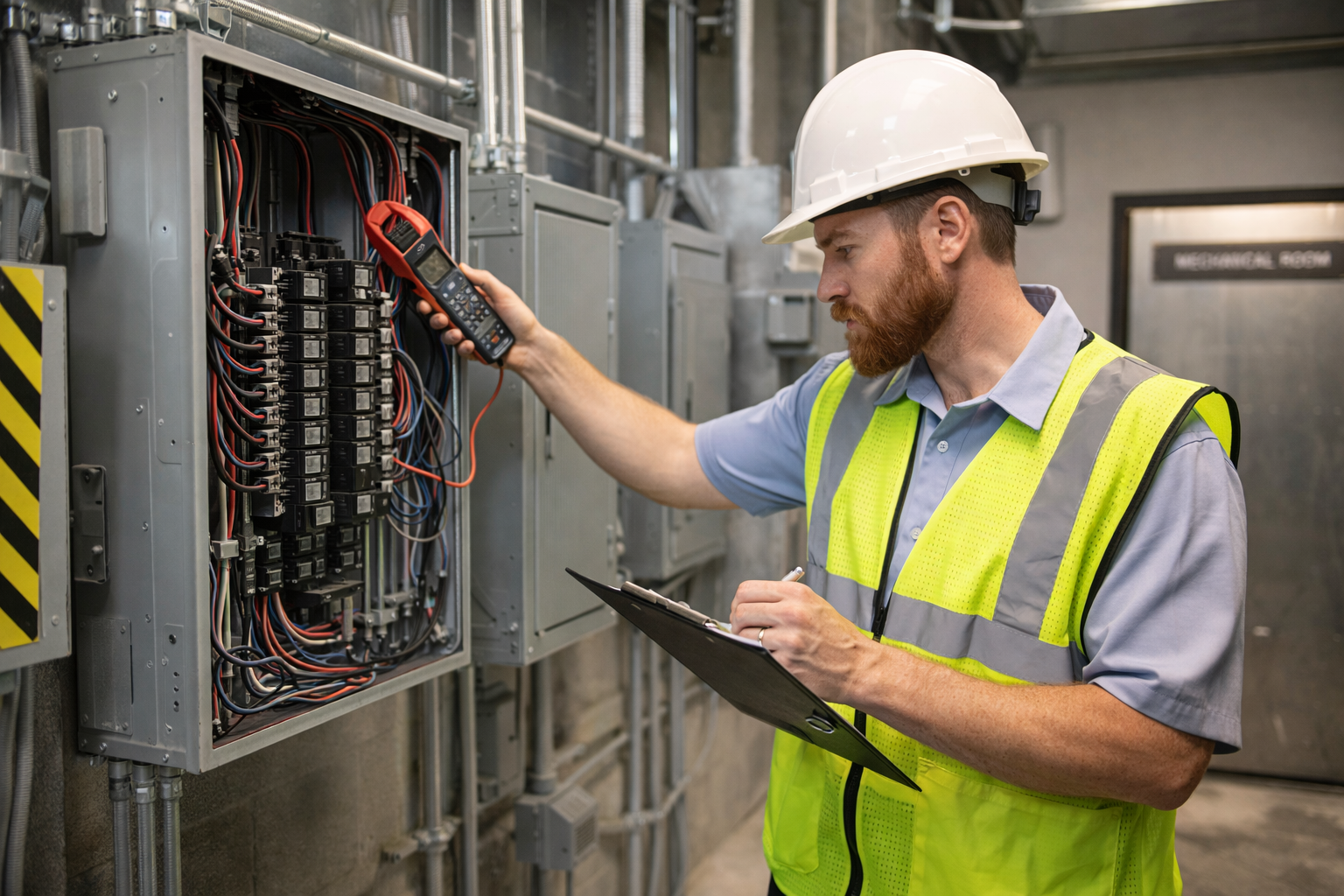
A Property Condition Assessment (PCA) is a critical component of commercial real estate due diligence. Unlike residential inspections that follow standardized state protocols, commercial assessments require a flexible, property-specific approach that addresses the unique systems, code requirements, and risk factors of each building type.
Our commercial inspections are aligned with ASTM E2018-15 standards, the industry benchmark for property condition assessments. Whether you are acquiring a single retail pad, refinancing a multi-tenant office building, or evaluating an industrial portfolio, our reports deliver the technical detail that investors, lenders, and asset managers require.
Who Uses Commercial Property Condition Assessments?
Buyers & Investors: Identify physical risks, quantify deferred maintenance, and negotiate purchase price based on actual building condition.
Lenders: Satisfy due diligence requirements and establish capital reserve adequacy for loan underwriting.
Property Managers: Establish baseline condition at acquisition, document existing deficiencies, and plan capital improvements.
Tenants: Evaluate building condition before signing long-term leases, particularly for triple-net (NNN) properties where maintenance responsibility transfers.
Commercial Property Types We Inspect
The North Dallas corridor's explosive growth has created a diverse commercial real estate landscape. We provide Property Condition Assessments across all major property types:
🏪 Retail Properties
- • Strip centers and pad sites
- • Neighborhood shopping centers
- • Single-tenant retail (NNN)
- • Restaurant and food service
- • Auto service and car wash
- • Convenience stores and fuel stations
🏢 Office Buildings
- • Class A, B, and C office
- • Medical and dental offices
- • Professional service buildings
- • Flex office/warehouse
- • Coworking and executive suites
- • Single-tenant build-to-suit
🏭 Industrial & Warehouse
- • Distribution and logistics
- • Manufacturing facilities
- • Cold storage and food processing
- • Flex industrial
- • Self-storage facilities
- • Truck terminals
🏨 Multi-Family & Hospitality
- • Apartment communities (5+ units)
- • Student housing
- • Senior living facilities
- • Extended-stay hotels
- • Limited and full-service hotels
- • Mixed-use residential
⛪️ Special Purpose
- • Religious facilities
- • Schools and educational
- • Daycare and childcare centers
- • Event and entertainment venues
- • Fitness centers and gyms
- • Veterinary clinics
🏗️ Development Sites
- • Existing structure evaluation
- • Adaptive reuse feasibility
- • Pre-demolition assessment
- • Renovation scope development
- • Code compliance gap analysis
- • ADA accessibility review
Scope of Commercial Property Condition Assessment
Our Property Condition Assessments follow the ASTM E2018-15 framework, adapted to the specific requirements of each property type and transaction. The baseline scope includes evaluation of:
🏗️ Site & Civil
- ✓ Topography and drainage patterns
- ✓ Paving, curbing, and striping condition
- ✓ Sidewalks and ADA accessibility routes
- ✓ Retaining walls and site structures
- ✓ Stormwater management systems
- ✓ Landscaping and irrigation
- ✓ Site lighting and signage
- ✓ Fencing and security features
🧱 Structural Systems
- ✓ Foundation type and condition
- ✓ Structural framing systems
- ✓ Load-bearing and shear walls
- ✓ Floor and roof structural decks
- ✓ Settlement and movement indicators
- ✓ Expansion joints and control joints
- ✓ Parking structure condition (if applicable)
- ✓ Seismic and wind resistance features
🏠 Building Envelope
- ✓ Roof systems and membranes
- ✓ Roof drainage and flashing
- ✓ Exterior wall cladding and facades
- ✓ Windows, glazing, and storefronts
- ✓ Doors and hardware
- ✓ Sealants and weather barriers
- ✓ Loading docks and overhead doors
- ✓ Waterproofing and moisture protection
⚡ Electrical Systems
- ✓ Service entrance and capacity
- ✓ Main distribution equipment
- ✓ Panelboards and branch circuits
- ✓ Emergency and standby power
- ✓ Interior and exterior lighting
- ✓ Fire alarm and detection systems
- ✓ Security and access control
- ✓ Telecommunications infrastructure
❄️ HVAC Systems
- ✓ Heating equipment and distribution
- ✓ Cooling equipment and distribution
- ✓ Ventilation and air handling
- ✓ Building automation and controls
- ✓ Exhaust systems (kitchen, garage, etc.)
- ✓ Refrigeration (if applicable)
- ✓ Equipment age and remaining life
- ✓ Energy efficiency observations
🚿 Plumbing Systems
- ✓ Domestic water supply and distribution
- ✓ Sanitary waste and vent systems
- ✓ Water heating equipment
- ✓ Plumbing fixtures and trim
- ✓ Gas piping and distribution
- ✓ Grease interceptors (food service)
- ✓ Backflow prevention
- ✓ Fire suppression systems
🚪 Interior Elements
- ✓ Common area finishes
- ✓ Tenant space condition (representative)
- ✓ Flooring systems and coverings
- ✓ Ceiling systems
- ✓ Interior partitions and doors
- ✓ Restroom facilities
- ✓ ADA compliance observations
- ✓ Wayfinding and life safety signage
🛗 Vertical Transportation
- ✓ Elevators (traction and hydraulic)
- ✓ Escalators and moving walks
- ✓ Wheelchair lifts
- ✓ Maintenance record review
- ✓ Code compliance status
- ✓ Modernization requirements
- ✓ Accessibility compliance
- ✓ Safety feature verification
Opinions of Probable Cost and Capital Planning
Beyond identifying deficiencies, our reports quantify them. Each finding includes an Opinion of Probable Cost, a rough order of magnitude (ROM) estimate for correction, categorized by urgency and timeline:
| Category | Timeline | Description |
|---|---|---|
| Immediate Repairs | Year 0 (At Acquisition) | Life safety issues, active water intrusion, non-functional systems, code violations requiring immediate attention, and conditions that will worsen rapidly without intervention. |
| Short-Term Repairs | Years 1-2 | Deferred maintenance items, components approaching end of useful life, and conditions that should be addressed within the first two years of ownership to prevent deterioration. |
| Capital Reserve Items | Years 3-10+ | Projected replacement of major building systems based on observed condition, age, and expected useful life. Supports long-term capital planning and reserve fund adequacy. |
| Maintenance Recommendations | Ongoing | Items that can be addressed through routine maintenance rather than capital expenditure, but require attention to prevent escalation. |
Supporting Your Transaction
Cost opinions in our reports serve multiple purposes in commercial real estate transactions:
- Purchase Price Negotiation: Quantified deferred maintenance provides an objective basis for price adjustments or seller credits.
- Loan Underwriting: Lenders use immediate and short-term repair costs to establish escrow holdbacks and reserve requirements.
- Capital Planning: Long-term projections support operating budgets and reserve fund planning for asset managers.
- Investment Analysis: Total cost exposure informs return calculations and investment committee decisions.
North Texas Commercial Construction Considerations
Commercial properties in Celina and the North Dallas corridor face specific challenges that our assessments address:
🌍 Expansive Soil Impacts
The same Houston Black clay that challenges residential foundations affects commercial buildings. We evaluate:
- • Slab-on-grade performance in retail and industrial
- • Parking lot and drive lane settlement
- • Building-to-pavement transitions
- • Foundation drainage and moisture management
- • Expansion joint condition and function
🌪️ Severe Weather Exposure
North Texas severe weather creates specific vulnerabilities for commercial buildings:
- • Large flat roof systems susceptible to hail
- • Metal building envelope hail and wind damage
- • Storefront and curtain wall wind loading
- • Rooftop equipment damage
- • Site drainage during extreme rain events
📈 Rapid Development Age Mix
The region's growth creates a diverse building stock:
- • New construction with builder warranty issues
- • 10-20 year buildings approaching major replacements
- • Older properties in established areas with deferred maintenance
- • Adaptive reuse and renovation projects
- • Varied construction quality across developers
⚡ Infrastructure and Utilities
Growth-related infrastructure considerations:
- • Electrical service capacity for tenant needs
- • Water pressure and fire flow adequacy
- • Sewer capacity and grease interceptor requirements
- • Telecommunications and fiber availability
- • Emergency access and fire department requirements
Additional Assessment Services
Beyond baseline Property Condition Assessments, we offer specialized evaluations that address specific due diligence needs:
♻️ ADA Accessibility Survey
Evaluation of compliance with Americans with Disabilities Act Accessibility Guidelines (ADAAG). Identifies barriers in parking, accessible routes, entrances, restrooms, and common areas with remediation cost estimates.
Recommended for: Acquisitions, refinancing, tenant improvements, and properties with public accommodation.
🔥 Life Safety and Code Review
Focused assessment of fire protection systems, egress compliance, and life safety features. Evaluates fire alarm, sprinkler, and suppression systems; exit pathways; emergency lighting; and occupancy compliance.
Recommended for: Occupancy changes, assembly uses, multi-tenant buildings, and older properties.
⚡ MEP Systems Assessment
Deep-dive evaluation of mechanical, electrical, and plumbing systems for properties with complex infrastructure. Includes equipment inventories, capacity analysis, and detailed remaining useful life projections.
Recommended for: Office buildings, data centers, manufacturing, healthcare, and hospitality.
🌡️ Thermal Envelope Survey
Infrared thermography of building envelope to identify insulation deficiencies, air infiltration, moisture intrusion, and HVAC distribution problems. Supports energy audits and envelope restoration planning.
Recommended for: Energy efficiency concerns, older buildings, and pre-renovation assessment.
Environmental Site Assessments
Property Condition Assessments evaluate physical building condition, not environmental contamination. If your transaction requires Phase I or Phase II Environmental Site Assessments, we can coordinate with qualified environmental consultants to ensure all due diligence components are addressed efficiently.
The Commercial Inspection Process
Step 1: Scope Development
Every commercial property is different. We begin with a detailed discussion of the property type, transaction timeline, lender requirements, and any specific concerns. This allows us to develop a scope of work tailored to your needs rather than applying a one-size-fits-all checklist.
- • Property type and size
- • Transaction type (acquisition, refinance, lease)
- • Lender or investor requirements
- • Known concerns or focus areas
- • Document availability (plans, maintenance records, prior reports)
Step 2: Document Review
Before the site visit, we review available documentation to understand the property's history and inform our field observations:
- • Previous inspection reports and PCAs
- • As-built drawings and specifications
- • Maintenance and repair records
- • Capital improvement history
- • Tenant improvement documentation
- • Warranty information
Step 3: Site Investigation
Our field team conducts a systematic walk-through of the property, documenting conditions with photographs, measurements, and detailed notes. We interview on-site personnel (property managers, maintenance staff) to understand operational history and known issues.
Access requirements: We will need access to mechanical rooms, electrical rooms, the roof, representative tenant spaces, and any areas of specific concern. Coordination with property management ensures minimal disruption to building operations.
Step 4: Report Development
Our reports are comprehensive yet accessible. They are technical enough to satisfy sophisticated investors and lenders, and clear enough for decision-makers who are not building experts. Reports include:
- • Executive summary with key findings
- • System-by-system condition narratives
- • Photographic documentation
- • Deficiency tables with cost opinions
- • Immediate, short-term, and capital reserve cost summaries
- • Remaining Useful Life (RUL) projections
Typical delivery: 5-10 business days from site visit, depending on property complexity. Expedited delivery is available for time-sensitive transactions.
Service Area
We provide commercial Property Condition Assessments throughout the North Dallas corridor and surrounding markets:
- ✓ Celina
- ✓ Prosper
- ✓ McKinney
- ✓ Frisco
- ✓ Allen
- ✓ Plano
- ✓ The Colony
- ✓ Little Elm
- ✓ Aubrey
- ✓ Pilot Point
- ✓ Anna
- ✓ Melissa
- ✓ Princeton
- ✓ Fairview
- ✓ Lucas
- ✓ Richardson
- ✓ Carrollton
- ✓ Lewisville
- ✓ Denton
- ✓ Greater Dallas-Fort Worth
For properties outside this area or multi-property portfolios across Texas, contact us to discuss your requirements.
Frequently Asked Questions
A Property Condition Assessment (PCA) is a systematic evaluation of a commercial building's physical condition, typically conducted during real estate transactions. It identifies existing deficiencies, deferred maintenance, and provides Opinions of Probable Cost for repairs and replacements. PCAs are aligned with ASTM E2018-15 standards and support due diligence for buyers, lenders, and property managers.
A PCA evaluates physical building condition, covering structure, mechanical systems, roof, envelope, and site improvements. A Phase I Environmental Site Assessment (ESA) evaluates environmental contamination risk from current and historical property uses. They serve different due diligence purposes and are often conducted together, but by different specialists. We focus on property condition; environmental assessments require environmental consultants.
We inspect retail centers, office buildings, industrial and warehouse facilities, multi-family properties (5+ units), mixed-use developments, medical and dental offices, restaurants and food service facilities, religious facilities, self-storage, hotels, and special-purpose buildings. If you have a unique property type, contact us to discuss your needs.
Site investigation duration depends on property size and complexity. A small retail space might require 2-3 hours on-site, while a large industrial facility, multi-tenant office building, or apartment community could require a full day or multiple days. Report delivery is typically 5-10 business days after the site visit. Expedited delivery is available for time-sensitive transactions.
Yes. Our reports include Opinions of Probable Cost (OPC) for identified deficiencies. These rough order of magnitude (ROM) estimates are categorized as Immediate Repairs (Year 0), Short-Term Repairs (Years 1-2), and Capital Reserve projections (Years 3+). Cost opinions support purchase price negotiations, loan underwriting, and capital planning.
Helpful documents include previous inspection reports, as-built drawings, maintenance records, capital improvement history, tenant improvement documentation, equipment warranties, and roof warranty information. We can proceed without these documents, but they improve the quality and efficiency of our assessment.
Commercial Property Due Diligence That Protects Your Investment
From single-tenant retail to multi-building portfolios, we deliver the technical insight you need to make informed commercial real estate decisions.
Call (972) 640-5861 to discuss your property